


Another way to explore support and regulation
Somatic psychotherapy does not always take place sitting across from one another in chairs as is done in a traditional seated psychotherapy model. For some clients, working with the body more directly can offer another way to explore patterns of support, protection, boundaries, connection, and nervous system regulation.
As part of my Somatic Experiencing® work, I may incorporate somatic table work and therapeutic touch into psychotherapy when clinically appropriate and desired by the client.
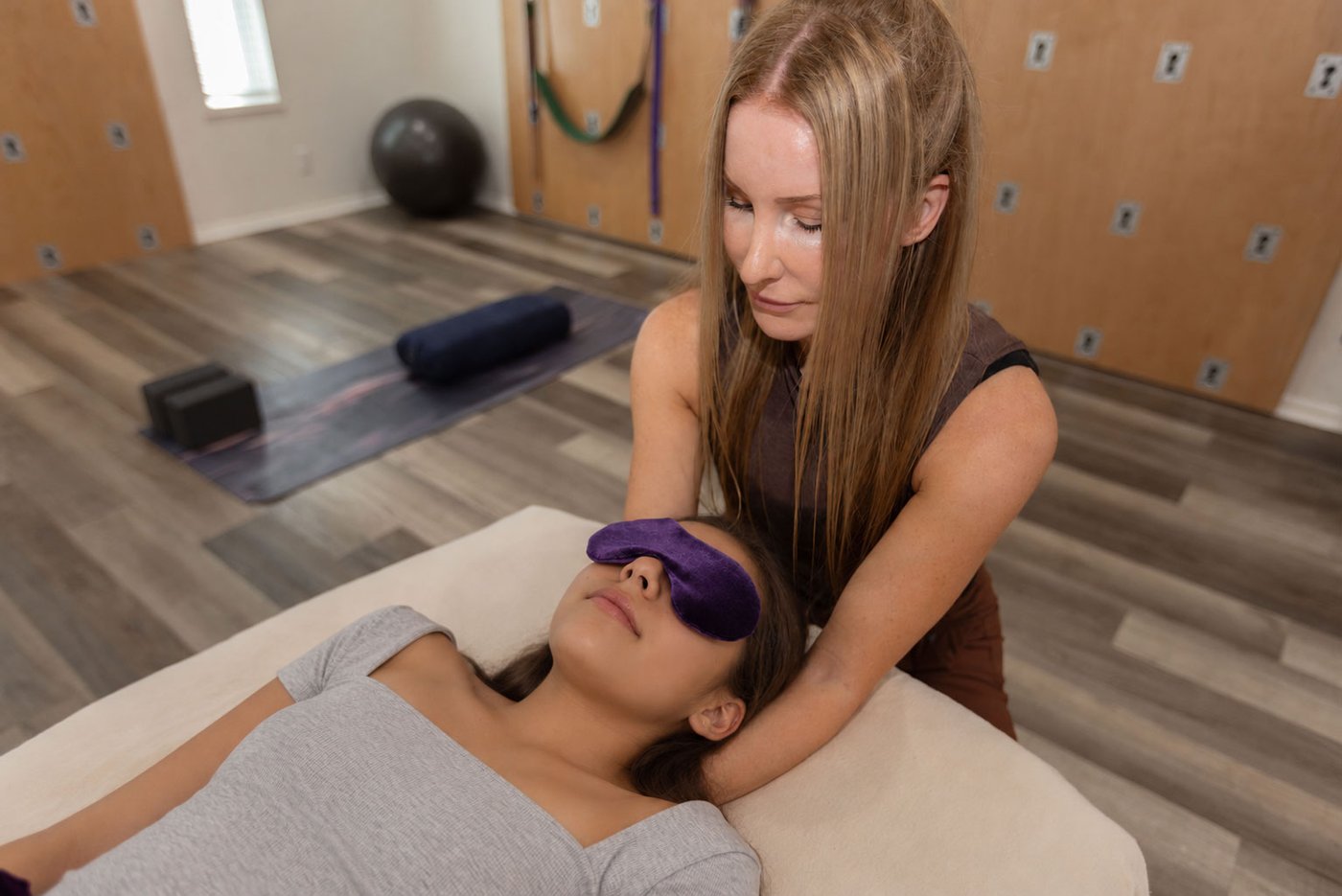
What Is Somatic Table Work?
Table work takes place fully clothed on a comfortable treatment table and may include the use of supportive props such as pillows, bolsters, blankets, or weighted supports.
Rather than massage or physical manipulation, the work is oriented toward awareness of the nervous system and the client’s internal experience. We may explore sensations of support, pressure, contact, boundaries, movement, stillness, activation, and settling.
Tracking the nervous system’s responses
Throughout the process, we track coherence: moments when the nervous system becomes more organized, connected, and able to integrate experience. Rather than trying to keep the body in a continuously calm or relaxed state, we allow space for the nervous system to move through natural cycles of activation and settling, while carefully tracking what supports greater capacity and regulation. From a trauma-informed perspective, the intention is to provide enough support for the body to move through natural cycles of activation and settling, allowing incomplete protective responses to move toward completion and greater regulation.
This may include noticing subtle shifts in breath, muscle tone, temperature, movement impulses, sensation, orientation, or other physiological responses as they emerge and change.
For some people, having a clear physical experience of support can provide information that is difficult to access through conversation alone. The intention is not to make something happen to the body or force relaxation, but to support the body’s capacity to move through experience with greater awareness, flexibility, and choice.
Therapeutic Touch
When appropriate, therapeutic touch may be incorporated into table work or other somatic interventions. Touch is used intentionally and collaboratively and may involve supportive contact through areas such as the hands, feet, shoulders, back, or other agreed-upon areas of the body.
The purpose of therapeutic touch is not massage or physical treatment. Instead, touch may be used as one way of exploring sensation, support, boundaries, orientation, connection, and patterns of nervous system activation and regulation.
Choice and Consent
Therapeutic touch is never required as part of psychotherapy.
Any use of touch is discussed beforehand and occurs only with explicit consent. Consent is an ongoing process rather than a one-time agreement. You may ask questions, request a change, decline an intervention, pause, or stop at any time.
For clients with histories of trauma, attachment disruption, medical experiences, or difficult experiences involving the body, maintaining choice and clear boundaries is particularly important. The pace and structure of the work are always individualized.
Integrating Table Work With Psychotherapy
Table work is not a separate massage or bodywork service. When I use it clinically, it is integrated into the larger psychotherapy process and may be combined with Somatic Experiencing®, EMDR, Relational Gestalt Therapy, attachment-focused psychotherapy, and other approaches based on your treatment needs and goals.
Some sessions may involve table work, while others may involve seated conversation, EMDR, movement, or other experiential interventions. There is no expectation that table work will be part of every session.
Is Table Work Right for Me?
Somatic table work may be worth exploring for clients interested in working more directly with body awareness and nervous system patterns, particularly when verbal insight alone has not fully shifted how certain experiences are felt in the body.
Whether table work is appropriate is something we can discuss together as part of treatment. There is never an expectation that clients participate in touch-based interventions in order to engage in Somatic Experiencing® or other forms of somatic psychotherapy.