


Safety, choice, and connection with your body
Trauma-informed yoga is a body-centered approach that emphasizes safety, choice, and present-moment awareness. Rather than focusing on performance, flexibility, or achieving specific postures, the practice is designed to support nervous system regulation, self-awareness, and a greater sense of connection with the body.
Find your next moment of connection.
Browse Mary’s current classes and workshops, and register through her online booking page.
Trauma and chronic stress can affect the way we experience our bodies, often leading to patterns of tension, disconnection, hypervigilance, or feeling overwhelmed. While traditional talk therapy can provide valuable insight and understanding, healing may also involve approaches that engage the body and support regulation at a physiological level.
An approach informed by psychotherapy and somatic practice
My approach to trauma-informed yoga is informed by my work as a psychotherapist, Certified Yoga Therapist (C-IAYT), and my training in Somatic Experiencing®, EMDR, and Relational Gestalt Therapy. These approaches share the understanding that healing often occurs through developing greater awareness of the body’s responses, increasing nervous system flexibility, and creating new experiences of safety, choice, and resilience.
Move at your own pace
Unlike many traditional yoga classes, trauma-informed yoga emphasizes invitational language, personal choice, and respect for individual boundaries. Participants are encouraged to move at their own pace, modify or decline any practice, and develop greater awareness of their own internal experience. The emphasis is not on “getting the pose right,” but on cultivating curiosity, self-compassion, and a sense of agency.
What a practice may include
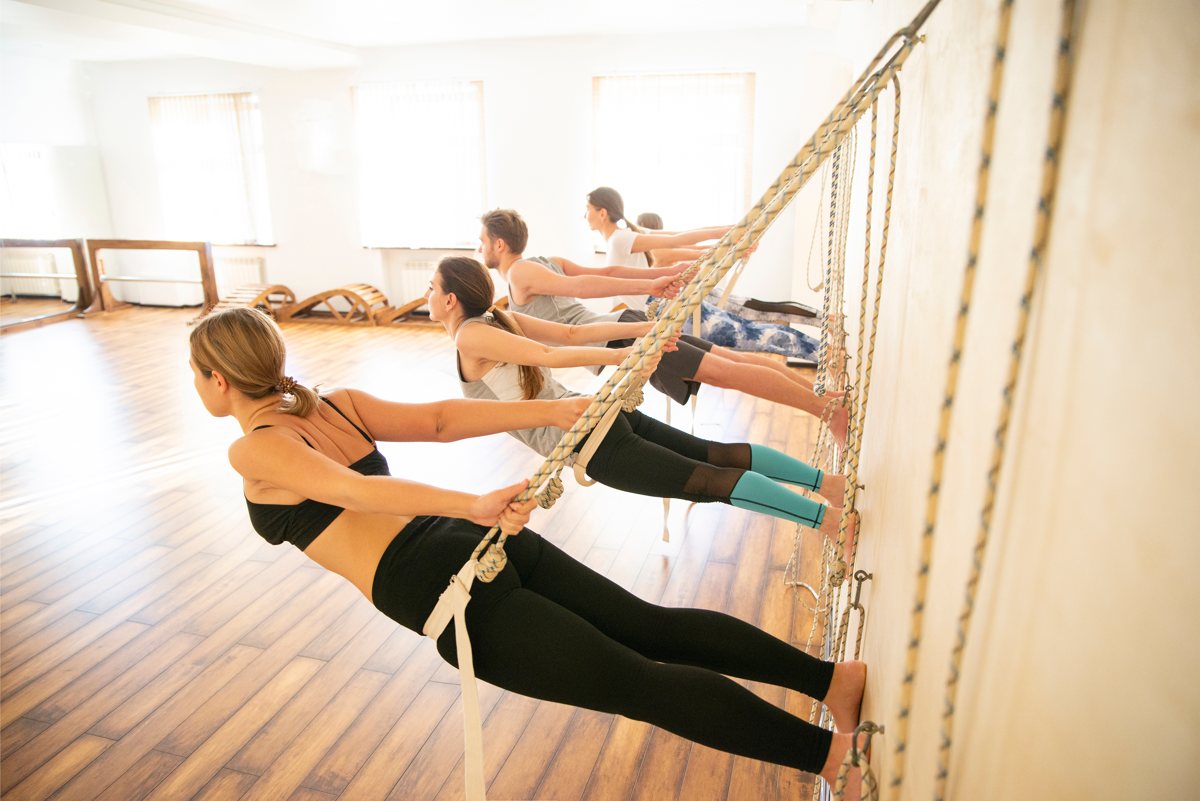
Practices may include gentle movement, breath awareness, restorative yoga, Yoga Nidra, mindfulness, supported movement using the yoga wall and therapeutic props, and other body-centered techniques that encourage regulation and embodied awareness. Every practice is adapted to meet participants where they are, regardless of previous yoga experience.
Who may benefit
- Trauma and post-traumatic stress
- Anxiety and chronic stress
- Burnout and emotional overwhelm
- Difficulty relaxing or sleeping
- Chronic muscle tension
- A desire to reconnect with the body in a safe, supportive way
Classes, workshops, and experiential programs
I periodically offer trauma-informed yoga through classes, workshops, retreats, and other experiential programs. These offerings are educational and experiential in nature and are not psychotherapy or billed to insurance. They are designed to complement—not replace—mental health treatment and provide practical tools for nervous system regulation and overall well-being.